

Every week, someone less qualified than you publishes a book and becomes the go-to expert in your field.
They’re not better at what they do. They haven’t helped more clients or solved bigger problems. But they wrote a book, and now they’re the ones getting invited to speak, quoted in articles, and charging premium rates.
You’ve been blogging for years. You have the expertise. You just don’t know how to turn what you already have into something that positions you as the authority.
The answer isn’t to write more content. It’s to develop one core idea and take it through a specific journey—from blog to book.
What is the one core idea?
Having one core idea or argument is what creates a strong foundation for your business, your blog and your book. Your core idea should combine your expertise, the reason people buy your services, and the purpose of your business.
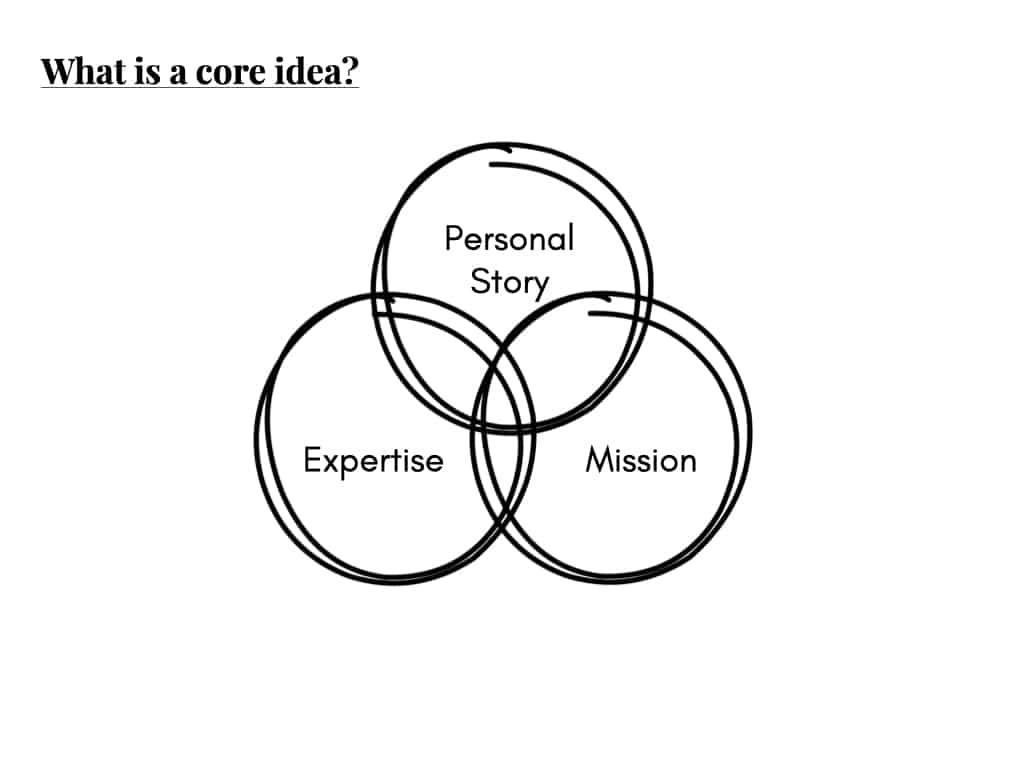
Let’s say you have a business mission that goes beyond selling services. It might be to make a change in the world to a specific set of people with a specific problem, such as giving kids more access to books or supporting working-class women to start a career in the arts. Whatever that is, you need to embed this within your core argument.
At the same time, look at what motivated you to start your business, and the influences that drive you to create change for your clients. Next, you need to include your expertise. These will all be interlinked because you have been present for all of them, and your decision and experience to date have all contributed to your success.
What you’re doing now is packaging all of that up to make a bold statement, which is backed up with evidence and anecdotes.
This sounds complicated…
If it sounds complicated, it’s because it is. Here is why it’s worth the effort:
It helps you:
- Stand out from all the junk and AI slop
- Build a framework around what you deliver
- Have a process to make every else you publish much easier
- Create a narrative that’s unique to you and brings in customers.
But first, you’ve got to have some original thoughts on the service you sell that will make a difference to the people who buy those services. Then you have to convince yourself that you’re the best person to tell this story (this is possibly the hardest part), and next get your clients and peers on board so they can learn from you.
It’s why not all founders get this right, or they struggle with it. Or, more likely, they haven’t got the time and headspace to give this the reflection that it’s due. When you do take the time to develop your core idea, it makes a huge difference. Not only to your authority as an expert but also to your business.
And the reality is that it can take a while to fully settle on the right core idea for you (it can take less time if you work with someone to help you develop it). Even when you have a core idea, you need to know that it will land with the right people.
For instance, if you are a solicitor, you’ve probably started your law firm because the way traditional law firms operate doesn’t quite fit in with how you want to work. Maybe it’s showing up as yourself, or perhaps you want to work different hours. Take that motivation and add it to the mix.
Then reflect on why you’ve chosen that particular area of law. Is it so that you can change things for people so that life isn’t so difficult? Or to make sure they don’t suffer again? Why you do what you do in the service of others is hugely important here.
Then, finally, you have your way of seeing things. Your expertise is what takes your core idea from being theoretical to becoming practical, so that others can learn from.
Once you have an idea of what your core argument will be, you then need to develop it. Remember, this idea may change as you work through the process. So how do you know if your core idea actually works? You test it where your audience already is: your blog.
Testing your core ideas with blogs
Blogs are one of the best ways to test if your idea has traction. You’ve probably been doing this for some time already. Publish your blog, share it on socials, and track the analytics to see what grabs attention.
With your blog, you can also keep editing it as your idea develops. That’s not all. You can combine it with social media to test headlines and key points so that your core idea becomes more focused on what your audience needs to know.
You can only do this with a blog that has had everything possible thrown at it and all variables tested. We’re not talking about 500 words that you’ve written in a hurry between meetings. No, this blog needs deep research, to be backed up with quality evidence, possibly even case studies and expert quotes.
It also needs to stand the test of time as well as get that first quick hit of engagement. This is especially true if you want to develop your work into a book. The book process is long, so an idea that attaches itself to a current trend will be long gone by the time you’re hitting the shelves. This means your blog needs to evidence that your core idea is built for the long-term and not simply hooking onto something that’s happening now.
This is the real reason why you need to test it with a blog first so that you can see what’s going to endure.
Develop your core idea into talking points
Once you know which blogs are standing strong long after their initial publication, it’s time to take this to the next level: talking points. These are the key takeaway nuggets that you want people to share when they come across your work. It’s the things that you want to be known for.
One of the biggest talking points that I share is how much energy and resources our digital marketing uses. There is a particular focus on AI as this is an energy-intensive tool, but also on our personal resources. This is backed up by data and hones in on my core argument that you can balance better results with sustainable marketing campaigns.
Your talking points need to be at that cross-section between your expertise, your market and your personal journey.
These talking points can hone in on a single area of your core argument. Or demonstrate how it helps a customer reach their goal. By bringing your core idea down to the value it gives others, you can start to build up some structure for reaching a wider audience.
You can use your talking points for PR pitches, such as going on a podcast as a guest. If your talking points are relevant to that podcast’s audience, it really helps the producers know that you are the expert in the area when you have plenty of published content for them to see.
Talking points can also give your LinkedIn content some serious structure. By testing different content formats on the channel, you can refine your talking points based on what gets the most engagement. This will help you tailor your argument even further to what people want to hear.
Why you need to build your own suite of research
Unless you have a big budget and lots of time on your hands, your research to date has probably been from other sources. If you’re serious about proving that your core idea has longevity and value, you need to develop your own suite of research.
This can be collating data from your clients or going out and doing wider research projects. The key here is that the research tests your theory. If you find that the research gives you a different answer, you need to build this into your core argument and adapt it.
For example, if part of your core argument is that current systems of content marketing are damaging the mental well-being of marketers, but your research shows that most people feel quite resilient to technology and workload, then you need to adapt your argument. Or look at the methodology of your research.
The purpose of building your own research and data isn’t just about SEO (it is good for SEO), it’s about having the evidence to back up your argument. The best thought leadership should provoke people (who are generally not your ideal client) to question it and pick holes. While for many founders, this can be off-putting, it is ultimately a good thing. If you can back up every facet of your argument with strong data, you demonstrate your authority and trustworthiness.
Original data will also head off the “whataboutery” that we inevitably get online. What’s more, you will start to be seen as the expert in your field. When you develop a research area, you become a leader in that field. You are the person on the ground setting out the hypothesis and either proving or disproving it.
It doesn’t need to be at an academic level, although if you can get that element of backing, it adds even more gravitas. Start simple and keep building on it at regular intervals. Doing an annual survey will eventually get traction behind it, even if it doesn’t feel like it in the first year.
Take your ideas to the stage
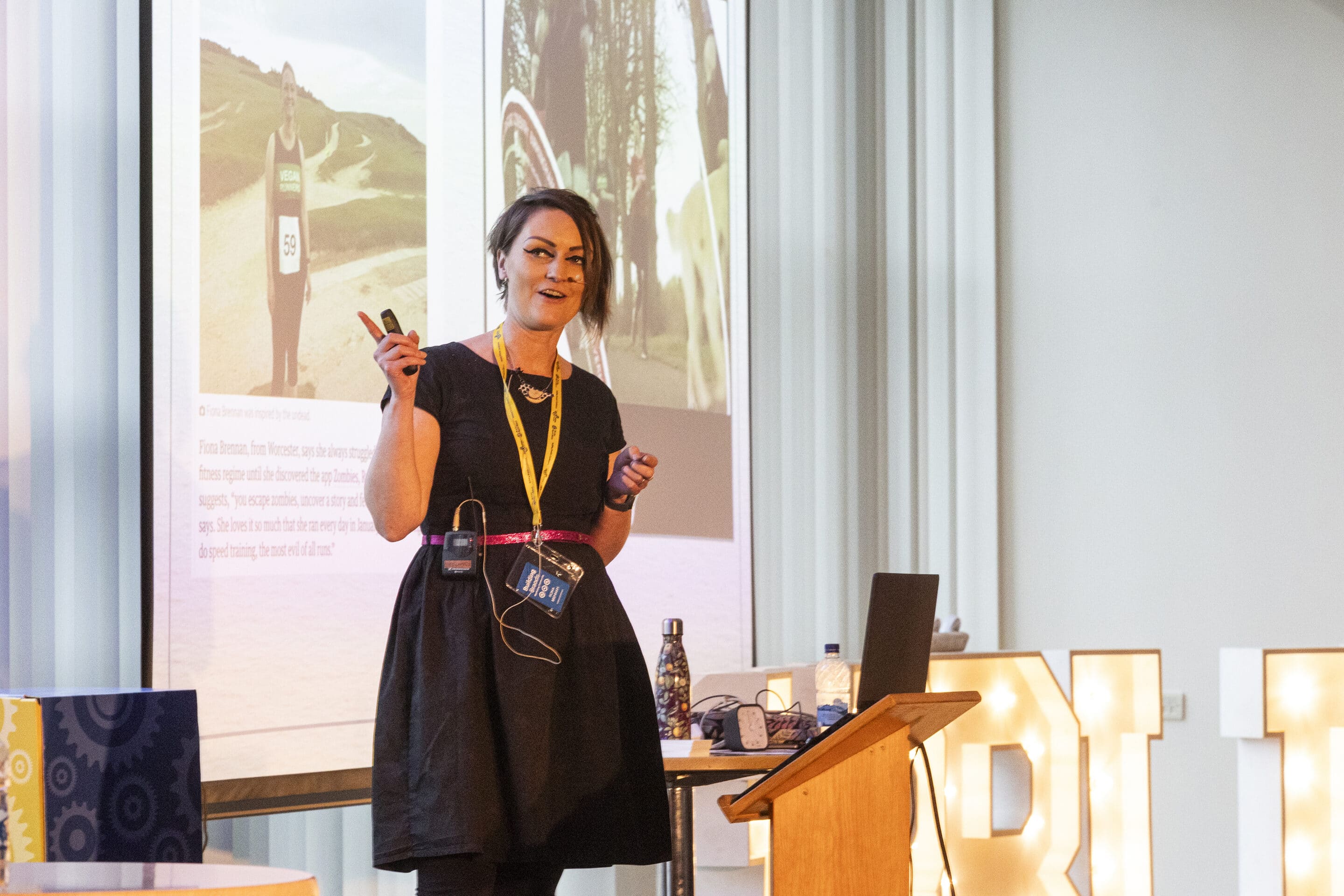
You can test your idea and any methodology you’ve created by taking it to the stage. Remember that talks need to distil only one small part of your core argument and give people enough to take away, wanting more.
Obviously, having a book makes getting talks a whole lot easier. So, why am I suggesting doing it the other way around? Because when you do a talk, even a small one to your local Chamber of Commerce, you get direct feedback. It’s a way of finding out the instant impact your ideas are having on others.
From here, you can tweak and improve it. By developing your talk – and therefore your core idea – in front of people in a live setting, you’re putting it under the biggest test. People are not afraid to tell you where you might have holes in your argument. While this might be your worst nightmare, it’s actually a good thing.
It helps you strengthen any weak points, know what feedback you’re likely to get, and tackle those challenges head-on.
Someone called out a piece of research I shared in one of my early keynote talks. There was a mini-Twitter pile-on about it. This was a tough lesson to put evidence on the slides and to talk about where more research is needed. It turned a criticism into a conversation.
Deepen your idea into a book
When you’ve put your core idea through the stress test, have improved it as much as you can, and seen what catches people’s attention, it’s now time to deepen it into a book. This might be solely your voice, your methodology and your ideas, but don’t discount the value other voices can bring.
There is every chance that your research on your specialist subject is not the only research. By addressing what else is out there, analysing it from your experience, and even pointing out any contradictions, you add an extra layer of authenticity and trust for your audience.
I once asked a book coach if there was any leader in her industry whom she would love to get writing. Her answer: if they are already a leader, they have written a book.
That is a pretty powerful argument for developing your blogs into a book. If you want to break through into the genuine leadership sphere and influence people, then you need to write a book.
Blog to Book: A Long-Term Goal
Going from blog to book is not an overnight success. It’s not even likely to happen within several months. It is a goal that you build up to over time. By developing your ideas and testing them through content in the right way, you can build your pathway to thought leadership.
The starting point is having the core idea upon which your foundation is built. The blocks that follow need determination and patience. Yet, the potential outcomes you can get will put you heads above your competitors and peers.
Take the first step
If all of this feels overwhelming, don’t worry, you’re not alone. It’s a big undertaking. The first step is to calm down on the content and start doing deeper thinking about the core idea. The only problem is, you’re running a business, and while you’d love to have the time to do deep thinking about your core argument, the reality is that you don’t.
This is where I can help. Instead of doing your big thinking by yourself, I get you on Zoom, ask the right questions and help you offload all the information about your process, your relevant background story and your expertise. Then, I bring this together to create a suite of thought leadership content and set out the next steps of getting it seen.
Ready to develop your core idea? Let’s talk: